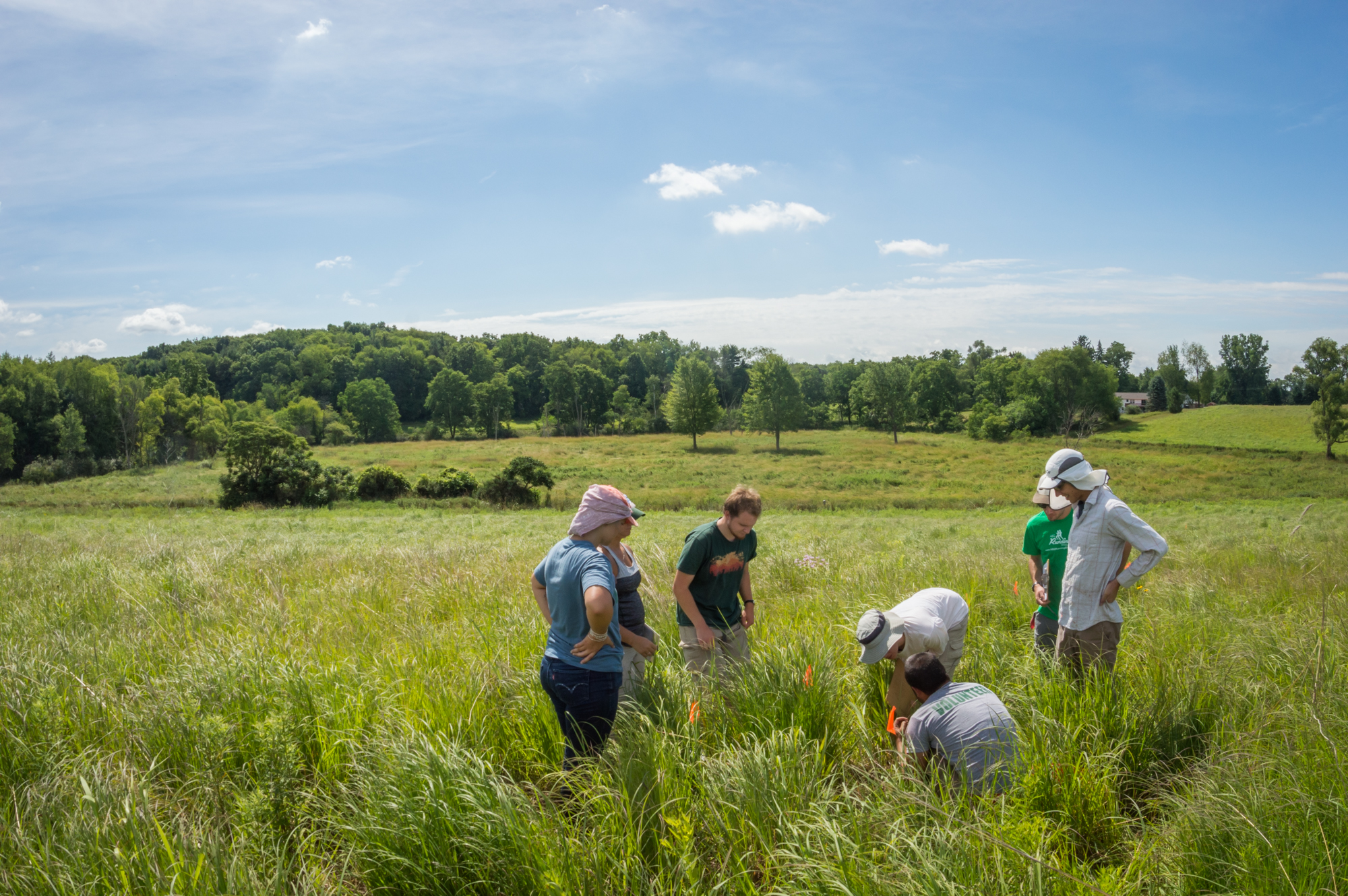
Intraspecific genetic variation can have large effects on ecological processes; however, effects may be underestimated because most studies to date are on small spatial-scales and short time-scales. In collaboration with Lars Brudvig (MSU) and Emily Grman (Eastern Michigan University), we are manipulating both plant genetic diversity and plant species richness at the field scale. Our experiment opens up new research possibilities, such as studies investigating the effects of genetic diversity on population demography and plant evolution. We have established permanent sampling transects within each site and are working with students and citizen scientists to monitor these treatments over the coming decades. Shorter-term manipulations explored the effects of climate warming, herbivory by insects and mollusks, seed consumption, soil microbes, and invasive species on native species establishment. Results from these studies document that warming changes which seed sources establish best in prairie restorations; that arthropods are voracious seed predators and potentially more important to prairie establishment than previously thought, and that patterns of prairie plant species establishment are impacted by vertebrate (mammals and birds) consumers and proximity to the restoration site’s edge.
 I am an evolutionary ecologist interested in understanding the full range of ways that plant populations respond to changing environmental conditions. Much of my work focuses on how rapid environmental changes (e.g., biological invasions, rising CO2 concentrations, and global climate change) impact population dynamics, species interactions, and the evolution of plant populations.